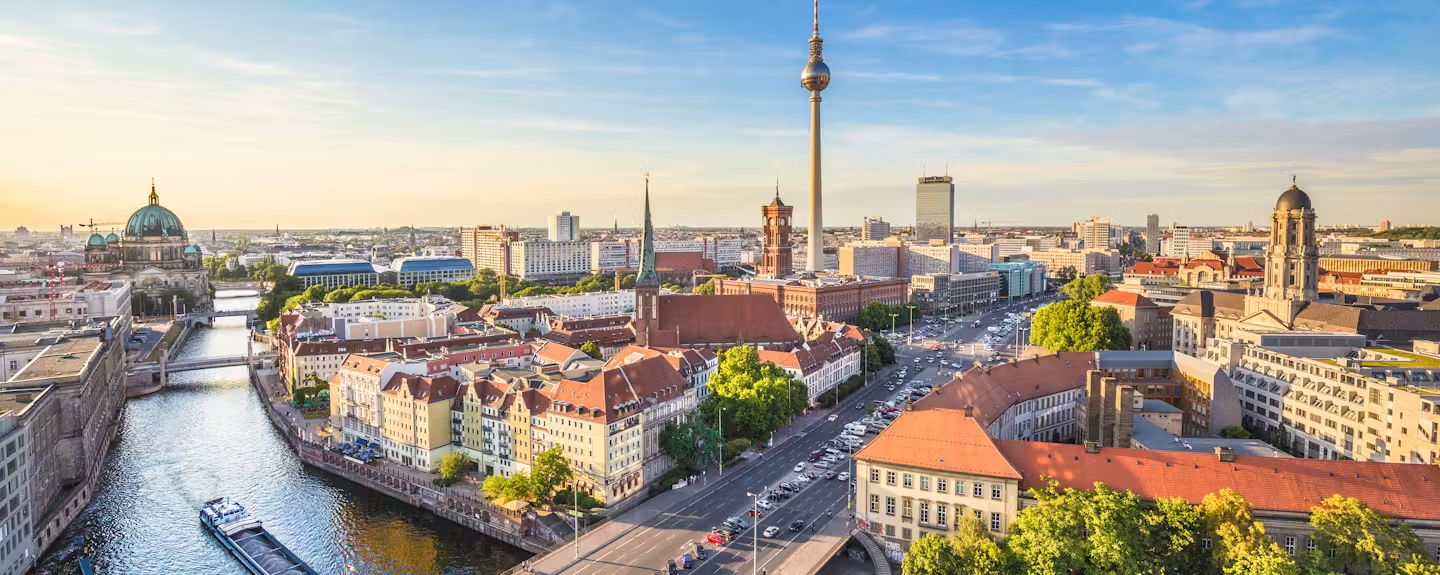
Culture in Germany
German people place a high value on being on time and getting things done in an organised manner. They are also hardworking and appreciate good discipline, while their communication style is direct. You will also find that Germans care a lot about social justice and environmental protection, and the country has many initiatives and programs in place to promote sustainability and social responsibility.
Cultural diversity in Germany
Germany is among the biggest countries in Europe and the second most populous on the continent (with a population of more than 83 million people). Its position in the continent's heart exposed it continuously to cultural influences: northern and southern, eastern and western-European.
Germany reflects its complex history and regional differences. Generally, western Germany has a slightly higher quality of life and salaries than eastern Germany. At the same time, religion is less important in the East than in the West, and there are lower living costs. Some of the major cities in the East include Berlin, Leipzig, and Dresden.
There are also cultural differences between the North and the South. The south is known for its traditional Bavarian culture, with lederhosen, dirndls (traditional clothes), and a strong beer culture. The north tends to be more international, with cities like Berlin and Hamburg known for their art scenes, nightlife, and fashion.
Each region has its own distinct traditions, dialects, and culinary specialities. For example, Bavaria is known for its traditional folk costumes, beer festivals, and hearty cuisine, while the Rhineland is known for its carnival celebrations and love of wine.
Different cultures in Germany
The country is home to many different ethnic groups, including Turkish, Poles, Russians, Italians, Romanians and others. Each of these groups has its own unique cultural traditions, languages, and customs, which contribute to the overall cultural diversity of the country. According to the Federal Statistical Office of Germany, the largest immigrant population in Germany is from Turkey, with more than 1,4 million people as of December 2021. Naturally, Turkish is the most commonly spoken immigrant language; in many schools, students can study it as a second language and even choose it as a subject for the Abitur (the German exam taken at the end of high school before they can continue to university).
Languages spoken in Germany
The main language spoken in Germany is called German or "Deutsch" (not to be mistaken with Dutch, which is spoken in the Netherlands). In school, most Germans learn the so-called "Standarddeutsch" or "Hochdeutsch," the standard or high form of German. However, there are many different accents and dialects spoken throughout the country.
Aside from German, several other languages are spoken in Germany due to its diverse population and history. Some of the most common are English, Turkish, Polish, Arabian, and Russian. You can get by knowing only one of these languages, especially English, which is taught in schools, and Turkish, which has a large immigrant population speaking it, but your experience will be limited. If you want to move past basic day-to-day activities or situations and want to enjoy socialising, as well as full work and study opportunities, then you need to learn German.
German food culture
Germany is known for its love of pork, beef, and sausages, served in hearty dishes, with potatoes, vegetables, and bread. Some of the most well-known German dishes include:
- Schnitzel - Thin, breaded and fried cutlets of meat, usually pork or veal, served with a side of potatoes, vegetables or salad.
- Sausages - Germany is famous for its many types of sausages, including bratwurst, weisswurst, and currywurst, often served with mustard and bread or potato salad.
- Sauerkraut - This is fermented cabbage commonly served as a side dish with meat.
- Spätzle - Noodles often served as a side dish with meat, stews or gravies.
- Pretzels - A soft, chewy bread often served as a snack with mustard or cheese.
- Black Forest Cake - A chocolate cake layered with cherries and whipped cream, named after the Black Forest region of Germany.
Overall, German food culture is diverse and flavourful, and many German cities and regions also have unique specialities and local dishes.
Weather in Germany
Germany has a temperate climate with warm summers and cold winters. However, there are some regional variations. In summer, temperatures can reach up to 25-30°C (77-86°F), especially towards the south of the country where it’s warmer. In fact, the southwest has a Mediterranean climate so you can even see exotic trees like lemons, kiwis, and figs. In winter, on the other hand, temperatures below the freezing point and snowfall are not uncommon, particularly in the Bavarian Alps and the Black Forest.