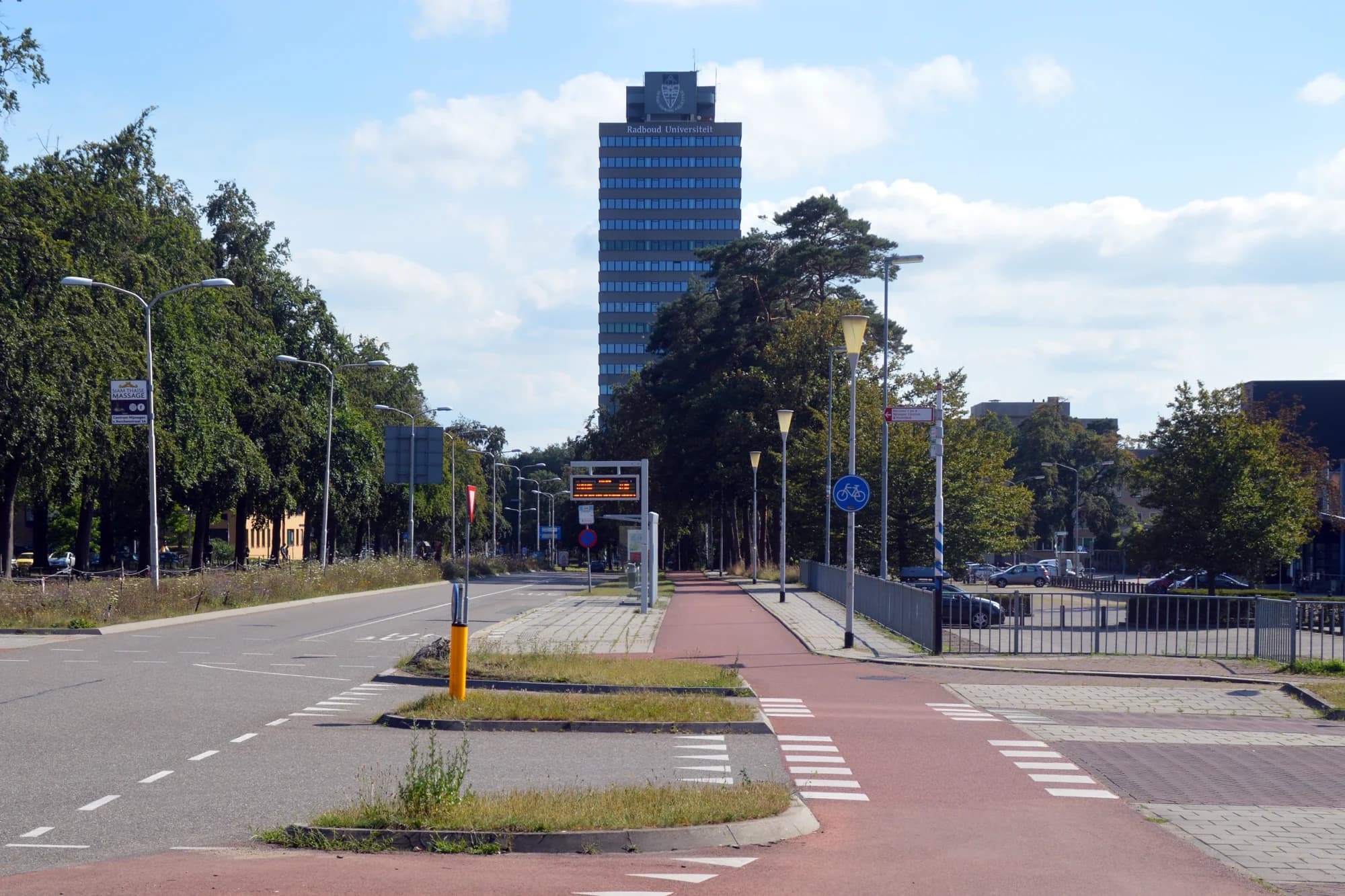
 Nijmegen, Netherlands
About Radboud University
Radboud University (Radboud Universiteit), established in 1923 in the historic Roman city of Nijmegen, is one of Europe’s leading comprehensive research universities. Consistently ranked within the global Top 150 (QS World University Rankings and Times Higher Education), Radboud is internationally acclaimed for its pioneering scientific research, student-centric academic culture, and picturesque green estate campus at Heyendaal. The university encompasses seven distinguished faculties—Science, Medical Sciences (Radboudumc), Arts, Law, Social Sciences, Philosophy, Theology & Religious Studies, and the Nijmegen School of Management—offering over 100 fully accredited, English-taught undergraduate and postgraduate degree programmes. Radboud gained worldwide scientific distinction in 2010 when professors Andre Geim and Konstantin Novoselov were awarded the Nobel Prize in Physics for isolating graphene during their foundational research in Nijmegen. Operating major interdisciplinary research hubs including the Donders Institute for Brain, Cognition and Behaviour, the Institute for Molecules and Materials (IMM), and collaborating closely with the on-campus Max Planck Institute for Psycholinguistics, Radboud provides an intellectually rigorous, socially engaged environment where over 24,000 students from more than 100 nations are empowered to change perspective and solve pressing global challenges.
Why Study Here?
Programs
22Tuition & Fees
Sample Tuition by Program
Tuition fees shown are indicative and may vary by program, intake, and year. Contact the university directly or visit their official website for the most up-to-date fee schedules. Additional costs such as student union fees, insurance, and living expenses are not included.
Scholarships
0Sign In to View All Programs & Admissions
Explore all 22+ undergraduate and postgraduate degree programs, tuition fees, scholarships, and requirements for Radboud University.